By Rowan Ellis · Updated October 15, 2026 · 7 min read
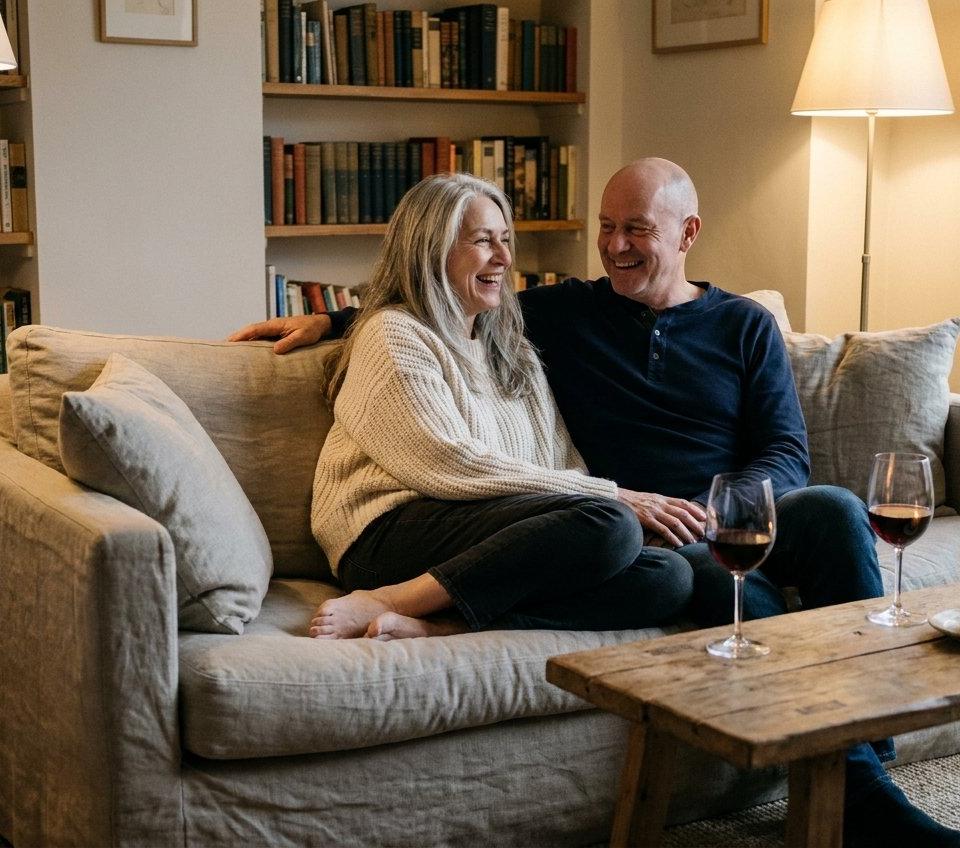
If you've started to like someone and your stomach drops every time you picture the bedroom part, you're in very good company. Maybe it's been thirty years with one person. Maybe you nursed a partner through a long illness and that side of life closed quietly years ago. Maybe there was simply a long gap and you stopped counting.
Here's the short answer to the questions under the nerves. Yes, you can still be wanted, and you can still want. There's no deadline and no third-date rule, so you move when you feel ready and not a minute sooner. And the one thing that really has changed since you were 25 is sexual health. Pregnancy may no longer be a worry, but infections still are, so testing and condoms belong in the plan.
You're also far from the only one starting again from scratch. In Match's Singles in America study with the Kinsey Institute, which is a dating company's own research, 74% of singles aged 59 to 77 said they'd had no sex in the past year (AARP). If it's been a while for you, it's been a while for a lot of the people you'll meet.
First, the nerves
Almost everyone coming back to this has some version of the same three worries: my body has changed, I've forgotten how this goes, and what if something doesn't work.
Start with the body. The person you're dating has lived just as many years as you have. They have scars, soft places and reading glasses of their own, and they are very likely lying awake over the same things. At this age nobody arrives in mint condition, and the people worth your time aren't expecting you to.
As for forgetting how it goes, the rules most of us learned were mainly about guessing. Guessing what the other person wanted, guessing whether it was too soon, hoping it would all go smoothly without anyone saying a word. You don't have to guess any more. You can ask, and you can tell. Most people find that a relief.
And yes, bodies change with age, for men and women alike, in ways that can affect comfort and confidence. Most of those changes are common and very treatable, which is why the doctor's office gets its own section below.
There's no schedule
You'll hear people talk about a third-date rule. Ignore it. In the same Singles in America research, about two-thirds of older singles were open to cuddling by the third date, and roughly a third were comfortable going further than that (AARP). Which means plenty weren't, and that's a perfectly normal place to be.
Chemistry still matters, of course. In the 2025 edition of the study, 91% of singles 50 and over said sexual chemistry is essential in a romantic relationship (AARP). Chemistry and speed are two separate things, though. A slow build can be the best part.
A few signs you might be ready: you trust this person, you've had at least one frank conversation like the ones below, you'd feel fine stopping halfway if something felt wrong, and you want to for your own reasons rather than out of a sense that you owe them after a nice dinner.
And if you decide to wait, for a month, a year or until you're sure about the relationship, that's a complete answer too. Anyone who's right for you will hear it without sulking.
Talking about it, before you need to
Here's a number that explains a lot. In the 2024 Singles in America findings, 49% of older singles said they never learned how to talk about sex, and 45% said they never learned how to give or get consent (AARP). Most of us were raised to keep quiet and hope for the best.
Talking first is easier than it sounds, and it goes best with your clothes on, somewhere neutral, like a walk or the drive home. You aren't negotiating a contract. You're giving each other information you'll both need.
You could say:
- "I like where this is going. I'd like to take the physical side slowly, and talk about it as we go."
- "It's been a long time for me, so I might be nervous. I'd rather laugh about that than pretend."
- "Is there anything you'd want me to know before we get closer?"
That last one is worth asking because it opens the door for them too. People bring all sorts of things to this stage: a health condition, a medication, a past experience, grief. Our guide to when to tell a date about your health covers that side of it.
Consent, at any age
Consent gets talked about as something for young people, and it matters every bit as much at 60. It simply means you both want what's happening, and either of you can change your mind at any point, including halfway through and including after an earlier yes.
In practice it sounds very ordinary. "Is this okay?" "Do you want to slow down?" "Shall we just stay like this for a bit?" Checking in rarely kills the mood. For a lot of people it's the thing that lets them relax.
Two more points, said plainly. Having been married before means you owe nobody anything now, and a new partner's patience doesn't earn them a yes. And if someone pushes past a no, sulks until you give in or makes you feel silly for wanting to slow down, that tells you something important about them. Our guide to red flags that look like romance walks through other signs like that.
The part people skip: sexual health
This is the bit nobody told our generation about, because when most of us last dated, the worry was pregnancy. That worry may be gone. Infections haven't gone anywhere.
Rates of chlamydia, gonorrhea and syphilis among Americans 55 and older more than doubled between 2012 and 2022, and syphilis cases in that age group rose seven-fold, according to CDC data (CNBC). Part of the reason is simple: some people skip condoms once pregnancy is no longer a worry, and doctors don't always ask older patients about their sex lives.
Three plain facts help.
Infections often have no symptoms. The CDC notes that you can have an STI and not know it (CDC). Feeling fine, or a partner looking healthy, tells you very little.
Testing is ordinary. Your doctor can test you in the office, and the CDC also points to clinics that offer free or low-cost confidential testing. It recommends that everyone aged 13 to 64 is tested for HIV at least once (CDC).
Condoms still matter. Use them until you've both been tested and agreed you're only seeing each other. If they've become awkward to use, ask a pharmacist or your doctor about options rather than going without.
How to bring up testing
This is the conversation people dread most, and it's usually over in two minutes. Have it before things get heated, never in the moment. You could say:
"Before we go further, can we talk about testing? I'm going to get checked, because it's been a long time and I'd like us both to know where we stand. Would you do the same?"
If they seem put out, you could add: "I'd ask anyone I was getting close to. It's just how I look after myself now."
A partner who agrees easily, or tells you they've already been tested, is showing you a green flag. One who makes you feel unreasonable for asking is showing you the other kind.
Talk to your doctor too
Plenty of the things that worry people coming back to sex after years away, such as dryness, pain, erections, the side effects of a medicine or recovery after surgery, are common and treatable. Your doctor has heard all of it before, even if it feels mortifying to raise. This article is general information, so for anything about your own body, your medicines or your own risk, talk to your doctor or a sexual health clinic.
If it helps, write your questions down and hand over the list. You could start with: "I've started seeing someone, I'd like to be tested, and I have a couple of questions about sex at my age."
If what's holding you back is grief, or something painful from the past, a therapist can help with that too. Asking for that help is a sign of strength, and many people find it makes everything else easier.
After a loss, the first time can bring grief with it
If you're widowed, the first time with someone new can stir up feelings you didn't expect: tenderness, guilt, relief, sadness, sometimes all in one evening. None of that means you did something wrong or weren't ready. Let the feelings come, and if you can, tell your partner a little about what's happening. Our guide to dating after losing your spouse covers the guilt in more depth.
A small plan for this week
You don't need to decide anything about sex this week. You can simply get ready.
- Book a check-up and ask for STI testing while you're there.
- Practice one of the lines above out loud until it sounds like you.
- Decide on one thing you'd want before getting physical with someone new, whether that's a certain number of dates, a test result or a real conversation, and hold to it.
Then let the rest happen at whatever pace feels right. You've waited this long. You're allowed to enjoy getting there.
Not sure where to start?
Eleven quick questions. Your best way to meet, picked for your age and goals.