By Rowan Ellis · Updated October 15, 2026 · 6 min read
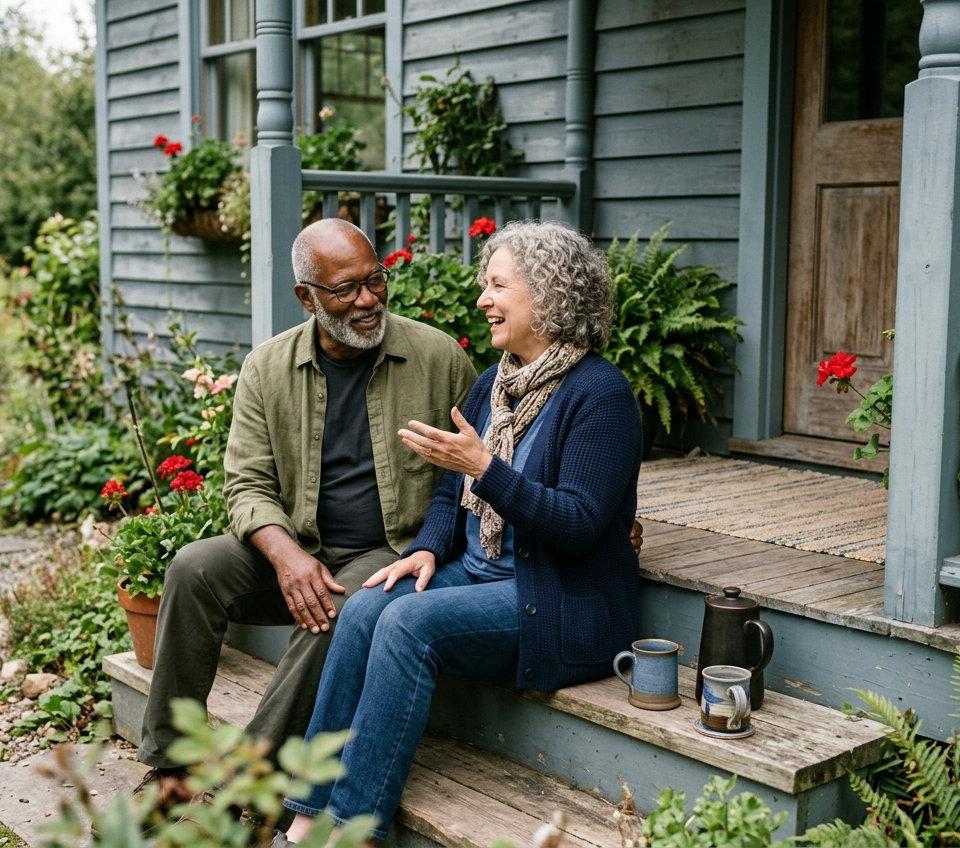
At some point, usually a few months into seeing someone you like, a quiet question shows up. Where is this going? When you were 25 the answer seemed obvious: you dated, you moved in or got engaged, you married. At 55 or 65, with a house, a pension, grown children and a whole life of your own, that old script can feel less like a plan and more like a pile of paperwork.
So here is the question underneath it: do you have to marry, or even move in, for a relationship to count?
You don't. More and more people over 50 are building serious, loving, long-term relationships that look different from the ones they had before. This guide lays out the four main shapes a later-life relationship can take, what each one means for your independence and your money, and how to talk about it with the person you're seeing.
You're in good company
The numbers have shifted a lot in one generation. In 2000, fewer than 1 million Americans aged 50 and over lived with a partner they weren't married to. By 2022 that figure had reached 4.6 million (National Center for Family & Marriage Research, BGSU). Most couples with someone over 50 are still married, but the share choosing another path keeps growing.
Some couples go further and keep two homes. In the UK, when single people over 60 start a new relationship, living apart together is by far the most common choice. Older single women are about 10 times more likely to choose it than to move in or marry (UCL). Even among Americans who do marry, it happens: in 2023, 13.7% of newlyweds aged 65 and over were living apart from their new spouse for reasons other than separation (BGSU).
Researchers who study later-life couples point to a familiar set of reasons. People want company and closeness. They also want to keep their independence, protect benefits they've earned, and keep their savings for their children (BGSU, Partnering in Later Life). None of those reasons are about loving someone less.
Companionship is a real goal
If what you want is someone to share dinners, trips and Sunday mornings with, and not a wedding, that is a complete answer. There's nothing second-best about it, and it doesn't have to be a step on the way to something "proper."
Plenty of people over 50 have already done the full version once. They raised a family, ran a joint household, and in some cases untangled all of it in a divorce or lost it to a death. Wanting love without merging everything again is a reasonable choice made by someone who knows what merging involves.
The opposite is true too. If you'd love to marry again, that's every bit as valid. The point is to choose on purpose instead of drifting into the shape you assume you're supposed to want.
The four shapes a later-life relationship can take
1. Dating steadily
You're a couple. You see each other often, meet each other's friends, maybe travel together. You each keep your own home, your own money and your own routines.
Good for: people who are early in a relationship, or who love it as it is and see no reason to change it.
Worth thinking about: without some talk about the future, one of you may quietly be hoping for more. Saying out loud that you're both happy here is part of what makes it work.
2. Living apart together
A committed, long-term couple with two homes. You may spend most nights together, or just weekends. Everyone knows you're a pair; you simply don't share an address.
Good for: people with a home they love, grown children who still come back, pets that don't get along, or very different ideas about how tidy a kitchen should be. The UCL researchers also note that it avoids the hard work of separating households if things end.
Worth thinking about: two homes cost more than one. And as you both get older, it helps to agree on what happens if one of you gets ill and needs care.
3. Moving in without marrying
You share a home and daily life but stay legally single.
Good for: couples who want the closeness of a shared household but want to keep their finances and legal lives separate.
Worth thinking about: an unmarried partner has very few automatic rights. If you're hospitalized, your partner may not be allowed to make decisions for you unless you've named them in writing. If you die, they may have no claim to the home you shared unless their name is on it or your will says so. A health care proxy, a will and a clear agreement about the house protect you both.
4. Remarrying
A legal marriage, with everything that comes with it.
Good for: couples who want the public commitment, the legal protection for each other, or simply the joy of a wedding.
Worth thinking about: marriage connects your finances in ways that are easy to underestimate. The next section covers the main ones.
Money, benefits and what you leave your children
This part is general information, not financial or legal advice. Rules depend on your state and your situation, so talk to a financial adviser or an estate lawyer before you make a decision.
Social Security survivor benefits. If you're widowed and collect survivor benefits on a late spouse's record, timing matters. Remarrying at 60 or older (50 or older if you have a disability) has no effect on those benefits. Remarrying before that age ends them, though you can qualify again if the later marriage ends (AARP). If you receive benefits based on a former husband or wife's work record after a divorce, ask Social Security how a new marriage would affect them before you set a date.
Pensions and other benefits. Some pensions and benefits from a former spouse can change when you remarry. Researchers list avoiding that loss among the reasons older couples live together instead of marrying (BGSU, Partnering in Later Life). Check the terms of yours.
Medical costs and debts. Depending on your state, a husband or wife can be held responsible for medical bills the other runs up during the marriage, and avoiding that is another reason researchers give for older couples staying unmarried. If either of you has health problems, ask a lawyer how it works where you live before you marry.
Inheritance. In many states, a husband or wife has a legal claim to part of the estate, even when the will says otherwise. If you want your house or savings to go to your children, a prenuptial agreement and an updated will matter a great deal. Unmarried couples face the reverse problem: without a will, a long-time partner can be left with nothing.
None of this should put you off marriage. Just sit down together, with real numbers, before you decide.
How to talk about it with the person you're seeing
This conversation goes better when it starts early and stays light. You don't need to bring a spreadsheet to the third date. But somewhere around the point where you're both calling it a relationship, it helps to ask:
- What did you love about being married, and what would you never do again?
- Do you picture us living together one day, or do you like having your own place?
- How do you feel about mixing money, even a little?
- What matters to you about what you leave your kids?
- If one of us got sick, how would we want to handle it?
Listen for the answer, and don't argue with it. If you want a wedding and they never want to marry again, that's important to know now. If you both love your own homes, you've just found something you agree on.
When your children have opinions
Grown children often have strong feelings about a parent's new partner, and money is frequently part of it, even when nobody says so. Choosing to live apart, or marrying with a clear prenuptial agreement, can take a lot of worry off the table.
You don't need your children's permission. But telling them your plan, and that you've thought about the house, the savings and what happens if you need care, can turn a tense conversation into a calmer one.
There's no right answer, only yours
Some people will meet someone wonderful and be married within two years. Others will spend 20 happy years with a partner who lives across town. Both are real love stories.
What matters is that you choose the shape that fits the life you have now, not the one you had at 25. Start with what you want, then find someone who wants something close to it.
Not sure where to start?
Eleven quick questions. Your best way to meet, picked for your age and goals.